

Fullerene C60
131159-39-2
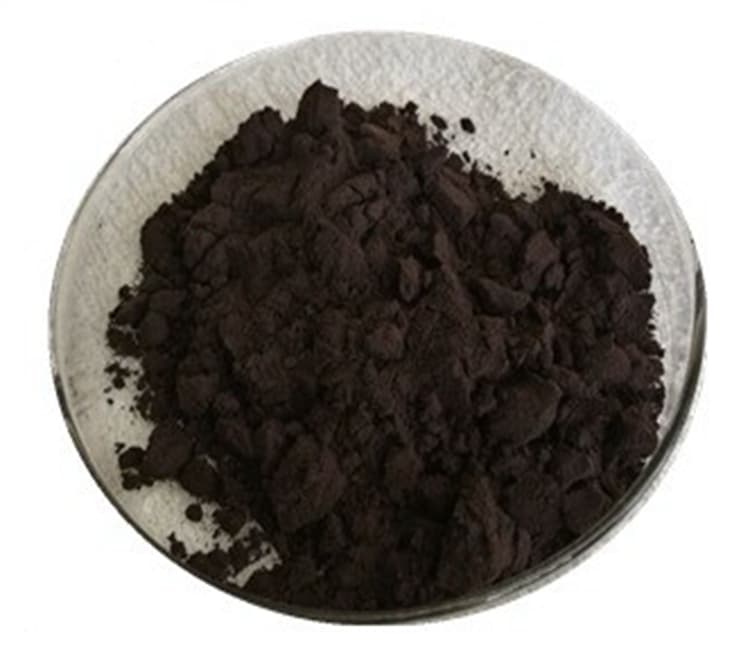
Fullerene C60

Fullerene C60, leveraging its unique cage-like structure, primarily serves as a highly promising precursor for advanced materials, showing broad prospects in developing novel superconducting materials, high-performance catalysts, and special composite materials. Simultaneously, it holds significant research and application value in various cutting-edge interdisciplinary fields such as optoelectronics, energy technology, and life sciences.
Übersicht
Fullerene C60 is an allotrope of carbon first discovered in 1985 by American scientists Kroto (H.W. Kroto) and Smalley (R.E. Smalley) and their team through laser vaporization of graphite followed by cooling. Its structure consists of 60 carbon atoms forming a highly symmetric soccer ball-shaped cage molecule, a configuration confirmed by experiments such as mass spectrometry and X-ray analysis. Subsequently, similar molecules like C70 were also discovered.
The unique structure of C60 endows it with distinctive physical and chemical properties. For instance, doping with small amounts of alkali metals like potassium or rubidium can impart excellent superconductivity, with a simpler fabrication process and harder texture compared to traditional ceramic superconductors. Carbon nanotubes derived from fullerenes can be a million times stronger than metals of the same diameter. Currently, research on the molecular structure, reactions, and applications of C60 in materials science, superconductors, and other fields is continuously deepening.
EINECS: 000-000-0
Product Categories: C60 & C70;Functional Materials;metal or element
Eigenschaften
Appearance & Form: black Powder
Melting Point: >280 °C(lit.)
Density/Specific Gravity: 1.6 g/cm3 / 1.6
Flash Point (Fp): >94 °C
Storage Temperature: Sealed in dry, Room Temperature
Solubility: organic solvents: soluble
Anwendungen
Based on its special properties, Fullerene C60 and its derivatives hold extensive and profound application potential across numerous scientific and industrial disciplines:
1. Materials Science:
Superconducting Materials: "Ionic" compounds formed by alkali metals (e.g., potassium, rubidium, cesium) bonding with C60 exhibit good superconductivity and may become high-temperature superconducting materials superior to existing ceramics.
High-Strength Materials: Tubular fullerenes (carbon nanotubes) possess ultra-high strength and low density, promising for use in advanced structural materials like new aircraft fuselages.
Special Composite Materials: Can be used in composite materials, construction materials, surface coatings, and rocket materials.
Semiconductor Materials: Silicon has been found to potentially form fullerene-like structures, which could become new semiconductor component materials.
2. Chemistry and Catalysis:
Catalysts: Catalysts based on Fullerene C60 can be used to synthesize previously unattainable materials or produce existing materials more efficiently.
Redox Materials: Transition metal fullerene C60 compounds exhibit good redox properties.
Supramolecular Chemistry: Water-soluble host-guest complexes formed by C60 with cyclodextrins and cyclophanes will play an important role in the fields of supramolecular chemistry and biomimetic chemistry.
3. Energy and Physical Technology:
Gas Separation: Utilizing its property of selectively absorbing gases, it may be applied to remove impurity gases from natural gas.
Nuclear Fusion Technology: Research on C60 ion beams bombarding deuterium targets is expected to be applied in molecular beam-induced nuclear fusion technology.
4. Optoelectronics and Information Technology:
Nonlinear Optical Devices: C60 and C70 solutions possess optical limiting properties and can serve as optical threshold devices and strong light protectors in digital processors.
Photoelectric Materials: Doping PVK with a mixture of C60 and C70 shows excellent photoconductive properties, with potential for use in electrostatic printing.
5. Other Fields:
Diamond Synthesis: Under high pressure, C60 can transform into diamond, opening a new source for diamond production.
Interdisciplinary Research: Its atomic clusters and derivatives have already involved numerous fundamental research fields such as life chemistry, organic chemistry, inorganic chemistry, and polymer science.
Kostenlose Muster anfordern
Möchten Sie unsere Inhaltsstoffe testen? Fordern Sie kostenlose Muster an, um Qualität und Leistung in Ihren Formulierungen zu bewerten.