
Reduced nicotinamide riboside(NRH) product banner

Reduced nicotinamide riboside(NRH)

19132-12-8
Reduced nicotinamide riboside(NRH)
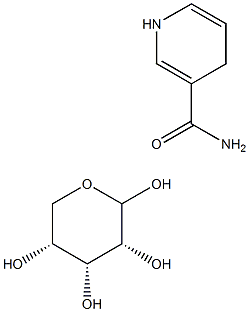
Reduced nicotinamide riboside(NRH)

Reduced nicotinamide riboside(NRH)Dietary Supplements
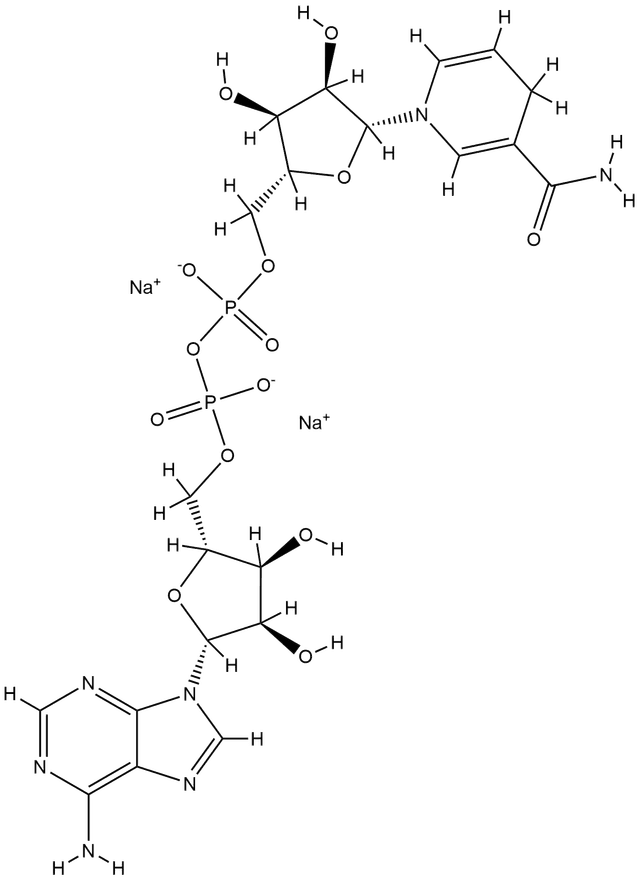
Structure: Reduced nicotinamide riboside(NRH) structure
CAS: 19132-12-8
MF: C11H16N2O5
MW: 256.26
Synonyms
1,4-dihydronicotinaMide riboside1-(D-Ribo furanosyl)-1,4-dihydro-3-pyridine carboxamide3-Pyridinecarboxamide, 1,4-dihydro-1-β-D-ribofuranosyl-Reduced nicotinamide ribosideD-Ribofuranosyldihydronicotinamide, mixture of isomers1-((2R,3R,4S,5R)-3,4-Dihydroxy-5-(hydroxymethyl)tetrahydrofuran-2-yl)-1,4-dihydropyridine-3-carboxamide1-(β-D-Ribofuranosyl)-1,4-dihydronicotinamide1,4-Dihydro-1-β-D-ribofuranosyl-3-pyridinecarboxamide
Usage

Reduced Nicotinamide Riboside is a precursor which is an essential cofactor and substrate for many cells.

Specification
99%+
Description

Overview

Reduced Nicotinamide Riboside (NRH; chemical name: 1-(beta-D-ribofuranosyl)-1,4-dihydronicotinamide) is the reduced form of nicotinamide riboside, belonging to the pyridine nucleoside class of compounds. It consists of a 1,4-dihydronicotinamide moiety linked to a beta-D-ribofuranosyl sugar at the 1-position. Structurally, NRH is distinguished from NR by the reduced state of the nicotinamide ring, which fundamentally alters its metabolic pathway and biological potency . Unlike NR, which requires nicotinamide riboside kinases (NRKs) for phosphorylation and subsequent conversion to NAD+, NRH utilizes a distinct, NRK1-independent pathway involving adenosine kinase (ADK) for its intracellular metabolism . This unique route allows NRH to bypass rate-limiting steps associated with conventional precursors, resulting in 2.5–10 fold increases in NAD+ levels within just one hour of administration to mammalian cells—substantially outperforming both NR and NMN . Beyond its NAD+-boosting capacity, NRH also acts as a direct scavenger of genotoxins such as hydrogen peroxide and methylmethane sulfonate, conferring cellular resistance to oxidative damage and apoptosis. In vivo studies demonstrate that NRH is orally bioavailable, well-tolerated, and rapidly distributes to tissues where it is metabolized for NAD+ biosynthesis. Comprehensive comparative analyses reveal that NRH induces broader transcriptomic, proteomic, and metabolomic changes than oxidized precursors, including upregulation of glutathione-S-transferases and modulation of energy metabolism pathways. Its unique ability to enhance the NAD+/NADH ratio without inducing apoptotic markers or significantly elevating lactate levels further underscores its favorable safety profile. Recent research has established NRH as a promising therapeutic agent for obesity-induced metabolic dysfunction, where it improves glucose homeostasis, enhances insulin secretion, reduces hepatic gluconeogenesis, lowers fat mass, and decreases serum lipids through Sirtuin activation and increased mitochondrial antioxidant defenses.

Product Categories: API

Characteristics

Boiling point: 598.3±50.0 °C

Density: 1.539±0.06 g/cm3

Pka: 13.37±0.70

Applications

1.Metabolic and Endocrine Research: NRH is extensively studied for its effects on glucose and lipid metabolism. In diet-induced obese mouse models, NRH administration improves glucose homeostasis by boosting insulin secretion, enhancing muscle insulin signaling, and reducing hepatic gluconeogenesis . It also lowers fat mass, decreases serum lipids (correcting hyperlipidemia), and improves white adipose tissue function through ADK-dependent NAD+ enhancement and subsequent Sirtuin activation . These findings position NRH as a potential therapeutic candidate for type 2 diabetes and metabolic syndrome.

2.Nephroprotection and Acute Kidney Injury Research: NRH demonstrates significant protective effects against cisplatin-induced acute kidney injury in murine models. Administration of NRH concurrently with or following cisplatin treatment reduces blood urea nitrogen levels, improves kidney histological outcomes (reducing cast formation), and normalizes renal NAD+ metabolite levels . This nephroprotective action is attributed to NRH's ability to maintain cellular NAD+ pools and counteract genotoxin-induced damage.

3.Immunology and Inflammation Research: NRH uniquely activates pro-inflammatory phenotypes in resting macrophages, inducing gene expression of cytokines, chemokines, and enzymes, while potentiating lipopolysaccharide-induced macrophage activation . These effects are mediated through adenosine kinase and equilibrative nucleoside transporters, suggesting NRH's potential role in modulating immune responses and inflammatory processes.

4.Aging and Cellular Health Research: As a potent NAD+ enhancer, NRH is investigated for its ability to counteract age-related NAD+ decline and associated physiological deterioration. Its superior NAD+-boosting capacity and induction of broader cellular changes compared to conventional precursors make it valuable for studying mechanisms of aging, mitochondrial function, and cellular resilience .

5.Toxicology and Genoprotection Research: NRH depletes genotoxins including hydrogen peroxide and methylmethane sulfonate, rendering cells resistant to cell death . This property supports its investigation in models of oxidative stress, DNA damage, and chemical toxicity.

Get Free Samples

Interested in testing our ingredients? Request free samples to evaluate the quality and performance of our products in your formulations.