

Dosage Form First: Why Curcumin’s Capsule vs. Emulsion Choice Defines EU Compliance & Therapeutic Success
Dosage Form First: Why Curcumin’s Capsule vs. Emulsion Choice Defines EU Compliance & Therapeutic Success
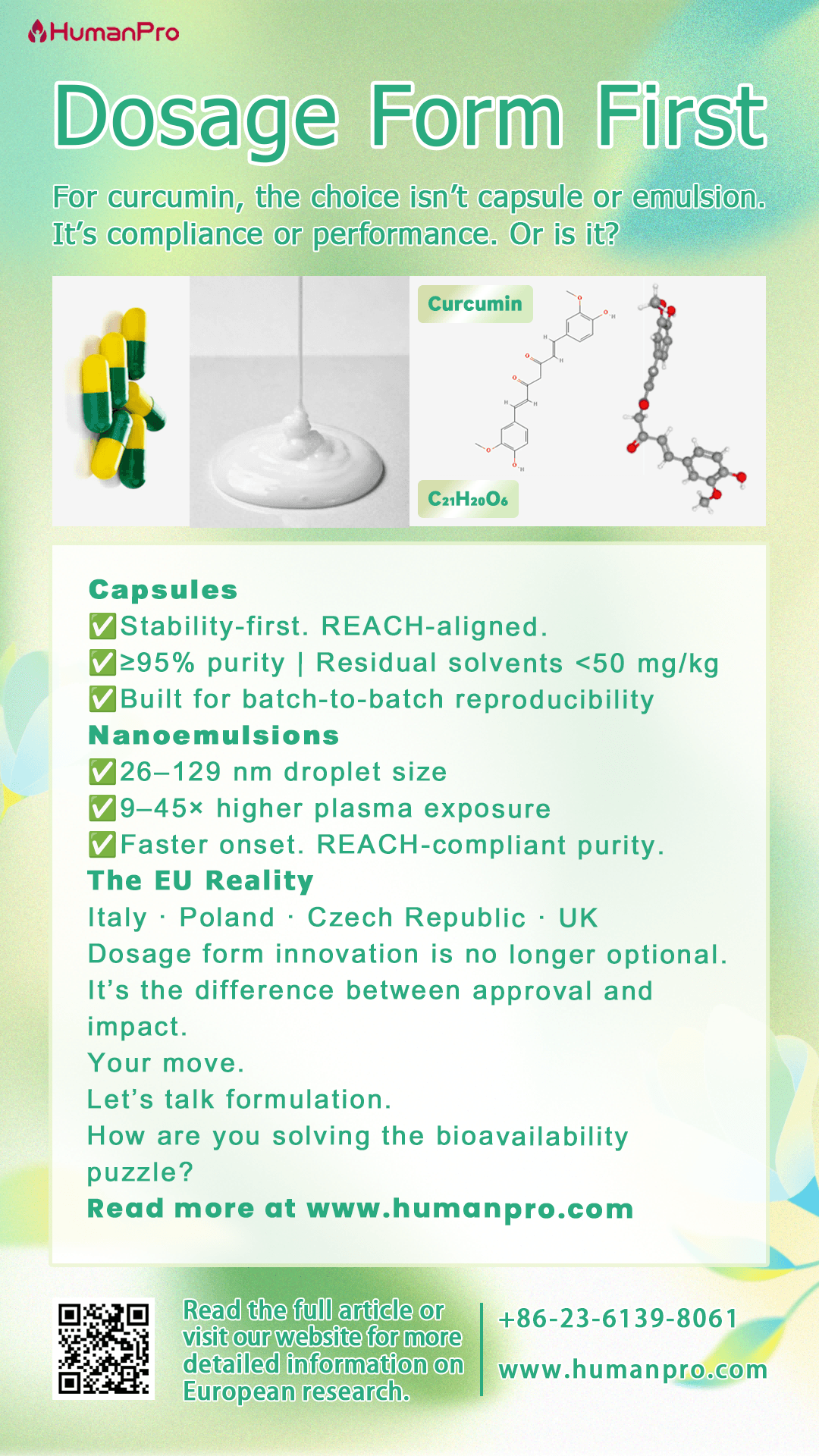
When formulating curcumin (C₂₁H₂₀O₆, CAS 458-37-7) for EU markets, the dosage form is not a secondary consideration—it is the primary determinant of both regulatory acceptance and clinical performance. The choice between a capsule and an emulsion fundamentally dictates bioavailability, stability, and REACH alignment.
The Mechanism Behind the Molecule
Curcumin’s anti-inflammatory activity operates through direct inhibition of NF-κB, COX-2, iNOS, and downstream cytokines (TNF-α, IL-6, IL-1β). These pathways are well-documented, yet its therapeutic potential has long been constrained by physicochemical realities: high lipophilicity and exceptionally poor aqueous solubility (≈30 nM). In conventional solid forms, this creates a classic bioavailability bottleneck that formulation science must overcome.
Capsules: The Compliance-Focused Path
EU-compliant capsules offer distinct advantages in chemical stability and controlled release. With ≥95% curcuminoid purity, meeting E100 specifications—they are built for regulatory rigor. Success here demands strict REACH-aligned batch-to-batch consistency, including residual solvents controlled at <50 mg/kg total and tightly managed impurity profiles. For manufacturers prioritizing reproducibility and long-term stability, capsules remain a validated, safety-documented approach.
Emulsions: The Performance-Driven Alternative
Optimized emulsions, specifically nanoemulsions redefine the performance curve. With droplet sizes ranging from 26 to 129 nm, they significantly increase dissolution rate, intestinal permeation, and bioaccessibility. The result is a 9- to 45-fold increase in plasma exposure compared to crystalline curcumin, enabling faster anti-inflammatory onset. Importantly, this bioavailability gain does not come at the expense of compliance. Through precise control of surfactant systems and encapsulation efficiency, nanoemulsions can meet REACH purity requirements while unlocking superior pharmacokinetic profiles.
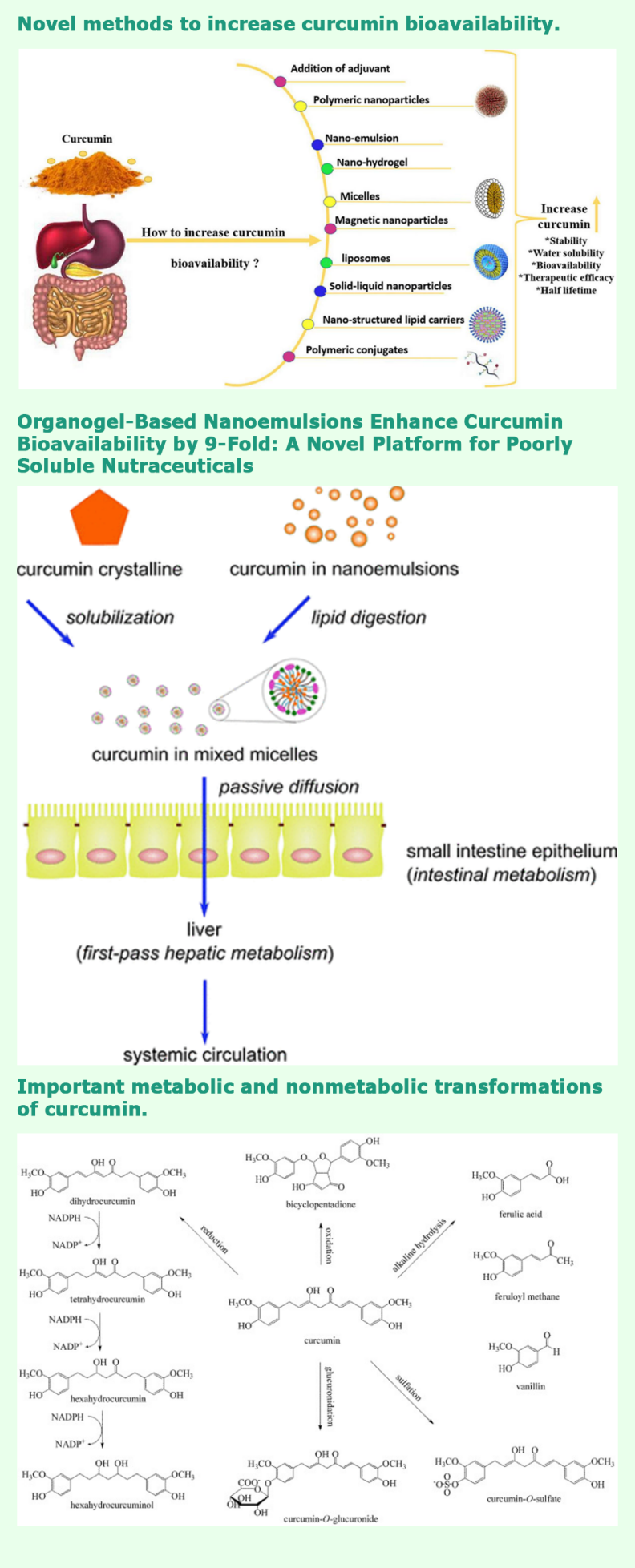
At a Glance: Capsule vs. Emulsion
² Capsules → Slower absorption, excellent long-term stability, purity-driven compliance
² Emulsions → Faster absorption, superior bioavailability, surfactant-optimized droplet consistency under REACH
Why It Matters in Key EU Markets
In markets such as Italy, Poland, the Czech Republic, and the UK, dosage form innovation has moved from “nice to have” to a competitive and regulatory necessity. The gap between regulatory approval and meaningful therapeutic impact is often defined by formulation strategy, especially for actives like curcumin that demand delivery science to realize their potential.
Let’s talk formulation. If you’re working with curcumin or other poorly soluble actives in the EU space, I’d love to hear how you’re navigating the capsule-emulsion decision.
#Curcumin #DosageInnovation #EUDelivery #AntiInflammatory #REACHCompliance #FormulationScience #Bioavailability