
L-Selenomethionine product banner

L-Selenomethionine

3211-76-5
L-Selenomethionine
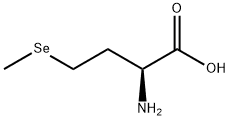
L-Selenomethionine

L-SelenomethionineAnti-aging
Structure: L-Selenomethionine structure
CAS: 3211-76-5
MF: C5H11NO2Se
MW: 196.11
Synonymes
(S)-(+)-2-AMINO-4-(METHYLSELENO)BUTANOICACID(S)-2-AMINO-4-(METHYLSELENO)BUTYRICACIDSELENOMETHIONINE,L-(+)-L-(+)-2-ChemicalbookAMINO-4-(METHYLSELENO)BUTANOICACIDL-(+)-SELENOMETHIONINEL-SELENOMETHIONINETheL-selenoMethionineL-SELENOMETHINONINE
Utilisation

L-Selenomethionine serves as the primary natural dietary form of selenium, used to enhance antioxidant capacity and support immune function. It is also utilized as a cancer chemopreventive agent and a crucial tool in protein crystallography for structural determination via selenomethionine labeling.

Spécification
99%+
Description

Aperçu

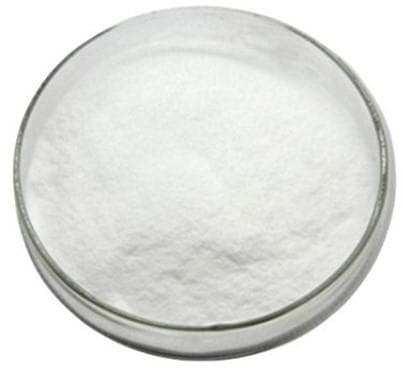
L-Selenomethionine is the L-isomer of selenomethionine and represents the major natural dietary form of selenium. It appears as a white to off-white solid powder at room temperature and pressure, exhibiting certain solubility in water and alcohols but poor solubility in ethers. As a chiral amino acid containing selenium, it retains the general physicochemical properties of common amino acids, including a characteristic color reaction with ninhydrin. However, due to the presence of selenium, it is sensitive to oxidizing agents and prone to oxidative degradation. Notably, L-Selenomethionine and L-Se-Methylselenocysteine are the only two naturally occurring selenium-containing amino acids and are collectively regarded as the third generation of selenium supplementation products.

Biologically, L-Selenomethionine exhibits multiple physiological activities, including enhancing sperm viability, boosting antioxidant capacity by increasing glutathione peroxidase expression, and improving immunity. It functions as a cancer chemopreventive agent, potentially reducing cancer incidence through dietary supplementation and inducing apoptosis in cancer cells. A key metabolic distinction exists between the two selenium amino acids: while L-Se-Methylselenocysteine is directly converted to methylselenol via β-lyase, L-Selenomethionine is non-specifically incorporated into proteins. Because methionine-tRNA cannot distinguish between methionine and L-Selenomethionine, when methionine intake is restricted, a large proportion of L-Selenomethionine replaces methionine and is incorporated into animal proteins. Consequently, compared to other forms of selenium, if L-Selenomethionine serves as the primary dietary selenium source, it can lead to significant tissue accumulation and potential selenium toxicity.

EINECS: 608-705-0

Product Categories: Seleno Amino Acid;Methionine [Met, M];Amino Acids;Antioxidant;Biochemistry;Biological-modified Amino Acids;Amino Acid Derivatives;Classes of Metal Compounds;Se (Selenium) Compounds;Semimetal Compounds;amino acid

Caractéristiques

Melting point: 265 °C

Alpha: 18 º (c=1, 1N HCl)

Boiling point: 320.8±37.0 °C

Refractive index: 18 ° (C=0.5, 2mol/L HCl)

Storage temp.: -20°C

Solubility: H2O: 50 mg/mL

Form: powder

Pka: 2.26±0.10

Color: white to off-white

Water Solubility: soluble

LogP: 0.152 (est)

Applications

1.Dietary Supplementation and Nutritional Fortification: As the predominant natural form of selenium in foods, L-Selenomethionine is widely used in nutritional supplements to enhance antioxidant status, support immune function, and improve reproductive health, particularly sperm quality. However, supplementation must be carefully managed due to its propensity for tissue accumulation, which carries a risk of selenium toxicity if intake is excessive.

2.Biochemical and Structural Biology Research: L-Selenomethionine is extensively employed in protein crystallography for phase determination in X-ray crystallography. By feeding bacteria or other expression systems with L-Selenomethionine, selenium atoms are incorporated into specific positions within recombinant proteins, enabling multi-wavelength anomalous dispersion (MAD) phasing and facilitating three-dimensional structure elucidation of complex biomolecules.

3.Pharmaceutical and Biomedical Applications: It is investigated as a cancer chemopreventive agent, with studies suggesting that dietary supplementation may lower the incidence of certain cancers through induction of apoptosis and enhancement of glutathione peroxidase activity. Additionally, its ability to boost endogenous antioxidant enzymes positions it as a candidate for adjunctive therapy in conditions associated with oxidative stress, though further research is needed to establish safe and effective protocols.

Demander des échantillons gratuits

Vous souhaitez tester nos ingrédients ? Demandez des échantillons gratuits pour évaluer leur qualité et leurs performances dans vos formulations.