

Spermidine Tetrahydrochloride
306-67-2
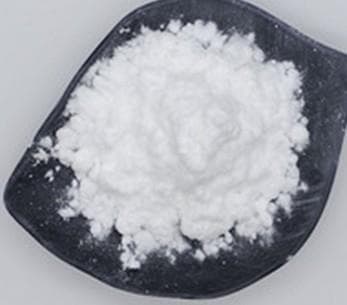
Spermidine Tetrahydrochloride
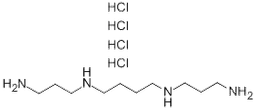
Spermidine tetrahydrochloride is an endogenous metabolite primarily used as an inhibitor of NOS1, NMDA receptors, GluR, and PLCα in neuroscience research. Concurrently, it serves as an efficient DNA precipitating agent, widely applied in DNA extraction, purification, and surface-enhanced Raman spectroscopy (SERS) analysis.
概要
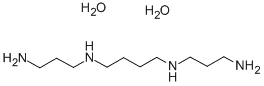
Spermidine tetrahydrochloride is the tetrahydrochloride salt form of the natural polyamine spermidine and is an endogenous metabolite. As a polyamine, it produces a variety of modulatory effects on the NMDA receptor channel, acting through a specific site on the complex which can cause both agonist and antagonist effects.
EINECS: 206-189-8
Product Categories: Glutamate receptor;Isolabel;co-factor
特性
Appearance & Form: White to off-white powder
Melting Point: 310-311 °C (dec.)(lit.)
Density (at 20 °C): 1.01 g/mL
Storage Temperature: room temp
Solubility: H2O: 1 M at 20 °C, clear, colorless
pH (25℃, 1M in H2O): 4.5-7.0
Biological Source: synthetic
Water Solubility: Soluble in water (348.2 g/L at 20°C).
用途
Based on its biological activity and chemical characteristics, spermidine tetrahydrochloride finds specific applications in the following research and experimental fields:
Neuroscience Research: As a research tool to investigate its inhibitory and modulatory effects on NMDA receptors, NOS1 (neuronal nitric oxide synthase), glutamate receptors (GluR), and phospholipase Cα (PLCα).
Molecular Biology & Genomics:
DNA Precipitation & Purification: Widely used to precipitate DNA from low-salt aqueous buffers, a common step in nucleic acid purification. Specific application examples include: precipitating DNA for flow cytometric analysis from fresh frozen breast cancer tissue, archival tissue of salivary gland, renal and thyroid tumors, and red blood cells of chicken.
DNA Structure Analysis: Used as a reactant in surface-enhanced Raman spectroscopy (SERS) for characterizing abasic sites in DNA duplexes.

無料サンプルを依頼
当社原料の評価をご希望ですか?処方での品質と性能を確認するため、無料サンプルをご依頼ください。