

124-20-9


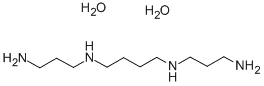
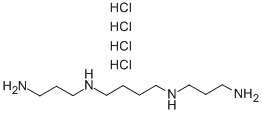
Spermidine is primarily used as an important pharmaceutical intermediate, widely applied in drug synthesis. Concurrently, it is a key bioactive molecule capable of exerting various physiological effects, such as delaying aging and regulating cellular functions, by modulating processes like protein metabolism and autophagy.
Spermidine is a low molecular weight aliphatic polyamine containing three amino groups and is one of the natural polyamines present in all living organisms. In terms of physicochemical properties, it is a colorless transparent liquid, hygroscopic, and soluble in water, alcohol, and ether.
EINECS: 204-689-0
Product Categories: co-factor;124-20-9;Coronavirus;API
Appearance & Form: Liquid After Melting, Clear colorless,Ichtyal, ammoniacal
Melting Point: 23-25 °C
Boiling Point: 128-130 °C (14 mmHg)
Density (at 20 °C) / Specific Gravity: 1.00 g/mL / 0.925
Storage Temperature: room temp
Solubility: H2O: 1 M at 20 °C, clear, colorless
pH (25℃, 1M in H2O): 12.0-13.5
pKa: 10.53±0.19 (Predicted)
Biological Source: synthetic
Water Solubility: Miscible with water, ethanol and ether.
Sensitivity: Air Sensitive
Stability: Stable, but air-sensitive and very hygroscopic - store under argon. Incompatible with acids, acid chlorides, acid anhydrides, oxidizing agents.
Based on its chemical properties and diverse biological activities, spermidine has well-defined and specific applications in several fields:
Pharmaceutical Chemistry: Serves as a key pharmaceutical intermediate for the synthesis of various drugs.
Neuroscience Research: Used as a research tool to explore its potential effects on neuroprotection, synaptic function, cognitive health, and related neurological disorders.
Biochemistry & Molecular Biology Research:
DNA/Protein Studies: Utilizes its property of binding and precipitating DNA for DNA purification and the purification of DNA-binding proteins.
Enzymology: Used to stimulate the activity of T4 polynucleotide kinase.
Signaling Pathway Research: Serves as an inhibitor of neuronal nitric oxide synthase (nNOS) for related signal transduction studies.
Plant Science & Agricultural Research: Investigates its role in regulating plant growth, development, and stress resistance, including delaying leaf senescence.
Aging & Longevity Research: As an important model molecule for exploring strategies to intervene in the aging process and related diseases by modulating autophagy and protein homeostasis.
당사 원료 테스트에 관심이 있으신가요? 제형에서 품질과 성능을 평가할 수 있도록 무료 샘플을 요청하세요.